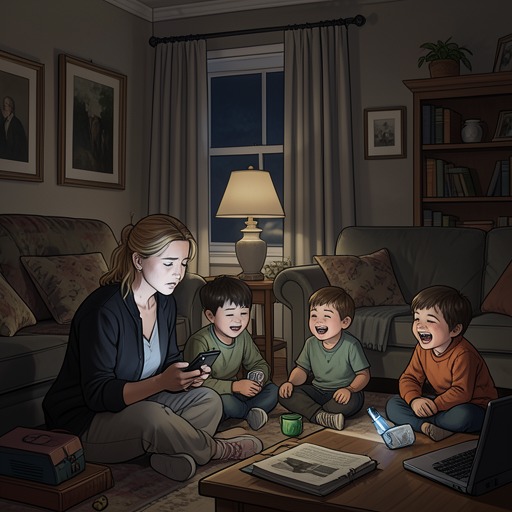
Yolandi and Nora’s mother-daughter relationship
All My Puny SorrowsYolandi and Nora’s mother-daughter relationship is a close, candid bond shaped by care that is practical as often as it is emotional. After moving together to Toronto for Nora’s ballet education, Yolandi tries to understand the city alongside her daughter, while keeping up with adolescence’s shifting demands. Nora is not simply the person Yolandi protects: she asks difficult questions, makes her own choices, and can answer her mother with comic precision. Their connection is tested when Yolandi’s attention is divided by her sister Elfrieda’s crises, but it remains a source of companionship and a reason to imagine a shared future.
Identity and circumstances
Nora is Yolandi’s daughter and, during the events described, a teenager whose age is given as fourteen and nearly fifteen. Yolandi has two children with two different fathers; while she reflects on the difficulty of mastering adulthood, her relationship with Nora unfolds amid work, study, parenting, and the responsibilities that draw her back to Winnipeg. These circumstances do not make Nora a background presence in Yolandi’s life. She is a companion in the household and in the city, and their exchanges show a mother trying to remain attentive without pretending to have everything under control.
The move to Toronto was made chiefly so Nora could attend a particular ballet school. A scholarship made the school possible because Yolandi could not otherwise have afforded it. Dance is therefore both a concrete opportunity and a major organizing decision in their life together. When a friend asks how Nora likes it, Yolandi reports that she loves dancing but thinks she is too fat. Yolandi also catches her smoking. These details show the ordinary work of parenting a young person whose developing independence brings pleasures and worries in close succession; the evidence does not resolve either concern into a crisis or a simple lesson.
Shared life in Toronto
In their new neighbourhood, Yolandi and Nora conduct a small experiment in making eye contact with passersby. On one walk in Little Malta, they count sixty-eight people; only seven return their gaze, and just one smiles, though they cannot tell whether the expression is genuine. They wonder together whether their clothes or manner make others avoid them, and admit that the repeated refusals to meet their eyes hurt. The experiment gives the pair a shared way to encounter the city: they observe it together, compare impressions, and expose a private sensitivity beneath their attempt to seem indifferent.
They also try to grasp the scale of their new home from above. At the CN Tower, they put a loonie into binoculars but cannot see the people they miss in Winnipeg. Later, at the Park Hyatt’s rooftop bar, Yolandi has a glass of twelve-dollar wine while they share olives and almonds and look westward. The view does not remove their sense of distance; it gives that absence a direction. Yolandi’s account makes the outing both an act of exploration and a small ritual of longing shared by mother and daughter.
At home, closeness takes a more comic form. When the question of where a boy will sleep arises, Nora suggests that Will should be told not to make him sleep in the laundry room; Yolandi turns the possibility into a joke about an old futon and piles of clothes becoming forts. Nora immediately rebukes her for treating her as younger than she is, insisting that she is nearly fifteen and asking whether her mother has forgotten her birthday. The exchange holds affection and friction together: Yolandi plays, Nora asserts her age, and neither needs to withdraw from the conversation.
Care, confidence, and adolescence
Nora’s questions can make Yolandi confront how her own feelings appear to her daughter. When Nora asks whether Yolandi regrets having children, Yolandi is shocked and worries that she has made Nora feel responsible for diminishing her life. Nora then explains that she is thinking of never becoming pregnant because she fears the bodily changes of pregnancy. Yolandi hopes Nora does not have an eating disorder. The exchange does not settle what Nora will decide about adulthood or parenthood; instead, it shows how a daughter’s frankness can reveal a worry that her mother had not known she was communicating, and how quickly concern can become self-questioning on Yolandi’s part.
Their correspondence also carries the less polished details of life at home. In a handwritten letter to Elfrieda, Yolandi describes an ant infestation that began while she was away in Winnipeg, the landlord’s suspicion that the apartment is dirty, and her own view that ordinary decay is a more likely explanation. She has put poison trays around the apartment and admits that the household is messy. Will has returned to New York, and Nora now has a boyfriend, a Swedish scholarship student from one of her classes. When Yolandi returns, she finds him cooking an omelette amid bags from Whole Foods. The letter is addressed to Elfrieda, but its account of Nora’s new relationship and the lived-in apartment records the changing household Yolandi and her daughter share.
Family strain and continuing attachment
Yolandi’s care for Elfrieda repeatedly requires her to leave Nora’s everyday orbit. During one hospital visit, Nora texts to ask how Elfrieda is, reports that Will has broken the front door, and says her curfew is four in the morning. Will, eighteen and in his first year at NYU, has been staying with Nora for several days while Yolandi is away; he also asks Yolandi to give Elfrieda a hug. These messages compress several family responsibilities into a single moment: Nora seeks news of her aunt, the household needs attention, and Yolandi depends on her son to look after his sister while she is with the rest of the family.
The strain also appears in Yolandi’s exchange with Dan, her former partner and Nora’s father. After Nora gets a little drunk with friends, Dan blames Yolandi for their daughter’s poor choice. Yolandi replies by pointing to Dan’s frequent absence in Borneo. Her response suggests that the parents’ disagreement is not only about one incident but also about who is present for Nora and who bears responsibility when she acts independently. The account does not supply Nora’s own explanation of the episode, so the conflict remains visible chiefly through the parents’ competing messages.
At another point, Dan reports that Nora broke into his email account and sent a mass message to his contacts claiming that he was gay and announcing this as a disclosure. The evidence does not establish why Nora sent it or whether the claim was true. Yolandi’s reply again refers to Dan’s being away, this time asking whether Nora may be angry about his continued absence. The episode shows how Nora’s actions can become entangled with parental resentment, while Yolandi interprets them in the context of the family’s distance and unsettled loyalties.
Yolandi’s divided attention becomes especially consequential when she is with Elfrieda. At one hospital point she asks Finbar to check on Nora and Will because Nora is not answering her phone. During the period when Yolandi is preparing to leave for Aunt Tina’s funeral in Vancouver, she tells Elfrieda that she will return and promises a stretch of time together in Toronto; she also says Nora is looking forward to Elfrieda staying with them. The proposed stay places Nora within the family’s effort to care for Elfrieda, not merely outside it waiting for Yolandi to come home. Even so, the promises expose the difficulty of dividing care among a daughter, a sister, and other relatives.
The relationship is thus defined less by uninterrupted attention than by repeated acts of contact: messages from Toronto, a shared walk, a view across the city, a joke about a laundry-room fort, and plans to make room for family in their home. Yolandi worries about what Nora feels and how she may be affected by what she sees; Nora, in turn, keeps asking questions and making her own presence felt. Their closeness survives the interruptions of distance and crisis through this ordinary exchange, in which affection does not require either of them to be perfectly composed.